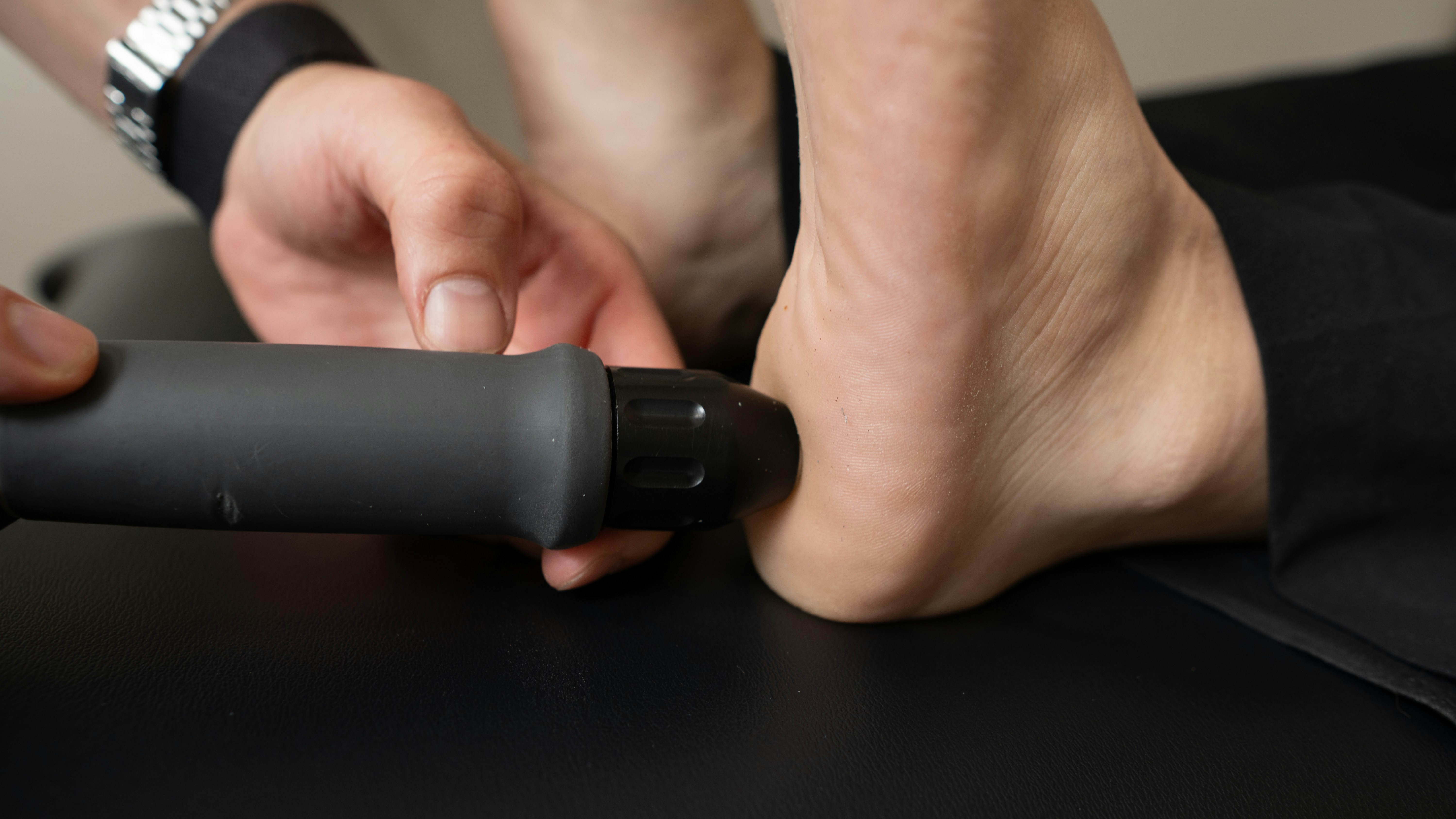
What Is Shock Wave Therapy?
Shock wave therapy, also called extracorporeal shock wave therapy or ESWT, delivers acoustic energy into painful soft tissue. These sound waves penetrate below the skin and stimulate the body’s natural healing response. The treatment is commonly used for chronic tendon, fascia, and soft-tissue conditions.
How It Works
Chronic pain often involves tissue that has not healed properly due to scar tissue, reduced blood flow, inflammation, or repeated strain. Shock wave therapy helps by stimulating circulation, breaking down scar tissue and calcifications, activating cellular healing responses, and reducing pain signals in the treated area.
What to Expect
During treatment, a specialized applicator is placed over the painful area. Pulses of acoustic energy are delivered into the tissue. Sessions often take about 15 to 30 minutes. Some patients feel mild discomfort during treatment, but intensity can usually be adjusted. Most patients return to normal activity afterward, though mild soreness may occur temporarily.
Conditions Treated
Shock wave therapy may be recommended for chronic plantar fasciitis, heel pain, Achilles tendinitis, heel spurs, chronic foot pain related to scar tissue or calcification, sports injuries, and persistent soft-tissue inflammation.
Shock Wave Therapy vs. MLS Laser Therapy
Shock wave therapy is especially useful for chronic tendon or fascia problems where scar tissue, calcifications, or limited healing are involved. MLS Laser Therapy focuses more on reducing inflammation and promoting cellular repair and may be preferred for nerve pain, wounds, arthritis, and post-surgical recovery. Some patients benefit from a combination approach.
Frequently Asked Questions
Is shock wave therapy painful?
Some patients feel mild discomfort during treatment, especially over tender areas, but it is usually tolerable.
How many sessions are needed?
Many patients receive a short series of sessions spaced over several weeks. The exact number depends on the condition and response.
Who is a good candidate?
Patients with chronic foot or ankle pain lasting several months and not responding to basic care may be candidates.